vLLM, SGLang, and TensorRT-LLM
vLLM, SGLang, and TensorRT-LLM
A PyTorch model can generate text, but it cannot serve a hundred users. Serving needs an HTTP API, a scheduler that decides which requests run in each forward pass, a manager that hands out KV cache memory as sequences grow and frees it when they finish, and a model runner full of attention and matrix-multiply kernels tuned for the GPU. An inference engine is that whole package. You point it at a Hugging Face repository and get an OpenAI-compatible server.
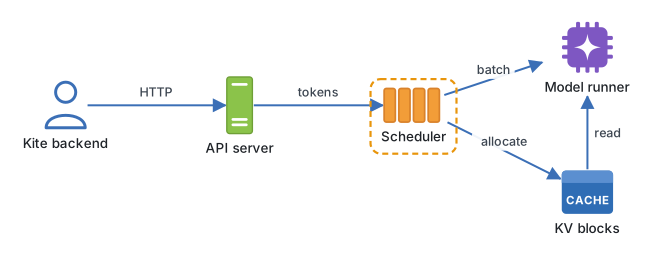
Three open engines cover most production LLM serving in 2026: vLLM, SGLang and TensorRT-LLM. They share the same architecture and the same core ideas, borrow from each other constantly, and all speak the same API. Choosing between them is less about which is best and more about which runs your model well on your hardware with the least operational pain.
Continue reading
Pro unlocks every video lesson, the full notes, worked sizing and cost calculations, and runnable configs across the Inference Engineering course, from GPUs and kernels to quantization, speculative decoding, disaggregation and production autoscaling.